Samuel Hoffenstein was my parents' poet-laureate, which explains why several of his anthologies dwelt upon a shelf in our house, already well before I was born.
My parents also had a brilliant take on the transmission of literature, generally. They never attempted to introduce us to their appreciated writers and poets, unless by passing quotation in context. Instead they stored representative works in a floor-level bookcase, and waited for us to get around to wondering what might be in those books we'd seen all our lives and never opened.
Which is where, a year or two after I learned to read, I pulled out Poems in Praise of Practically Nothing.
I'd cultivated a budding interest in poetry as a genre, but really, it was that title: the mutual contradiction of "poems", "praise", and "practically nothing", flouting the piety with which the first two words were always presented in school.
Satirical versifier of a populist American school that includes, to list just three, James Thurber, Edward Gorey, and Dorothy Parker, Hoffenstein also had – as did those other three – a grown-up day job. (Hollywood screenwriter, in Hoffenstein's case.) But he found time to fill several volumes with typically brief, slightly mind-bending poems.
Better still, he was able to get them into print, and therefore into our hands.
If Hoffenstein has since dropped into obscurity, he was quite as widely fêted and bemoaned in his day as the above contemporaries.
I still remember the first Hoffenstein verse I encountered, having opened Practically Nothing to a random page. I was soon laughing out loud, and when my mother glanced to see what I was up to, she rolled her eyes and told my father, "He's reading Samuel Hoffenstein." Which he too found amusing.
But really, whose fault was that?
These many decades later, I find a certain koanic character – even Zen chic – in much of the Hoffenstein œuvre. I mean, come on! Who else praises nothing? In fact, that first-discovered sonnet, which remains my favourite to this day, is outright literary dharma combat.
Read it for yourself. Isn't this Issa-grade haikunist-shaming?
The camel has a funny hump— Well, what of it? The desert is an awful dump— Well, what of it? The sun it rises every day— What about it? Roosters crow and asses bray— What about it? The stars shine nearly every night— Don’t bother me with it! Grass is green and snow is white— Get out o’ here!
Some tastes are in-bred, I guess.
If you'd like a deep dive into these lost treasures, Poems in Praise of Practically Nothing is available free on the Information Superhighway in at least two places:
• Archive.org's Digital Library, where this title and several others may be read online or downloaded.
• And this compendium of Hoffenstein's entire shelf, available for download.
For as the Master himself taught:
Let the winds of fortune blow
To the metres that I know:
There are always better times
Waiting to corrupt our rhymes.
(Photo courtesy of Mrika Selimi and Unsplash.com.)
My mom died three nights ago. I had been looking after her for several years, managed her home hospice daily over the last six months, and as usual, was alone with her in the house when she went.
The blessing is that she went quietly, after dropping into a two-day sleep from which she did not rouse. Finally she simply declined the next breath, and that was that.
Likely the death any of us would choose if choice were given.
It's famously hard to know what to say to a person in my place. What is less well-known is how hard it is to know what to say when you're the person in my place. Aside from Issa, few meet the challenge.
Which is perhaps why one of my favourite cinematic moments has been running through my mind.
It's the last line of the brilliant Canadian coming-of-age memoir, Histoires d'hiver. As the final scene of his childhood plays out, the protagonist, now my age, says this in voiceover:
« Papa est décédé il y a quinze ans déjà, et maman, elle, la nuit dernière. Et aujourd'hui, je me sens comme un enfant qui n'a plus le choix de devenir enfin un adulte, car il n'est plus le petit gars de personne. »
I expect I'll share further meditations as they become available.
(Photo from the final scene of Histoires d'hiver. The movie itself, like most Canadian films, is difficult to find. The YouTube video linked in the text is the only source I could locate, and of course, YouTube tends to blank such things straightway.)
Here's another great Zen hermit video. This time it's former Marine and corporate warrior Scott Mangis. He's been inside (got okesa and the whole 8.2296 metres), but these days practices essentially on the Issa plan, as a family man and member of a freeform skete near Tokyo.
So cue 'er up, brothers and sisters. It's nine minutes well-spent.
Kobayashi Issa is my all-time favourite poet. Regular readers will find this tediously typical, for though he's one of Japan's Four Great Haiku Masters, Issa is not "the Zen one". (That would be Bashō. I like Bashō too, but he doesn't "hit" for me nearly as often as Issa.)
Issa annoys modern Zen on many levels. He was ordained in the Jōdo-shū sect, a Pure Land Buddhist denomination that Zenners (including myself) find a bit futile. Worse yet, he was a hermit, and on the contemporary model: he had a family, and socketed his stick dead-centre of the Red Dust World.
Yet his descriptions of hermit practice, and his distillations of eremitical insight, are the most concise, most incisive, and most accurate I've found.
Witness his most famous lines, written hours after his baby daughter died:
This world of dew
Is a world of dew
And yet.
And yet.
That simply can't be improved. If you take anything out, it falls short. If you put anything in, it collapses.
Non-Buddhists may miss the sad satire here. Our teachers often compare human existence (mistakenly but universally called "the world") to dew: it comes from nowhere, sparkles for minutes, and goes back to nowhere. Attachment to same – craving permanence in the eternally temporary – is the origin of suffering.
Accepting this sets us up for cushion error: proudly declaring that we're liberated, because we know the truth.
And yet.
And yet.
Starting to get why this middle-aged suburban church-boy so troubles Zenners?
He's also easy-going, an affront to Zen's samurai puritanism, and accepting of his own nature. His perspective is, in short, eremitical.
Exhibit B:
Napped half the day
no one
punished me.
On the eremitical path, you do what practice suggests. This is different from monastery life, where you do what order demands, what tradition demands, sometimes what the current master demands, whether it makes sense or not.
Life inside requires that kind of discipline; life outside, another kind. Issa's poem suggests that on this day, this was the right call.
And as always, his trademark self-mockery. "If only I were half the monk I claim to be."
Word.
Note the same theme, with a different conclusion, here:
Napping at midday
I hear the song of rice planters
and feel ashamed of myself.
All the time I pray to Buddha
I keep on
killing mosquitoes.
And what of those elegant Zen dilettantes, as hip in the West today as they were in 18th century Japan?
Writing shit about new snow
for the rich
is not art.
I gotta stop there or I'll copy and paste every poem my brother ever wrote. (I've literally never found one – not one – that isn't my favourite.) If these crumbs have whetted your appetite, you may binge at will here.
OK, one more. Until next week, here's Issa's take on being a haikunist. (Essentially, the blogger of his time and place.)
Pissing in the snow
outside my door
it makes a very straight hole.
(Photo of Kobayashi Issa's monument courtesy of 震天動地and Wikimedia Commons.)
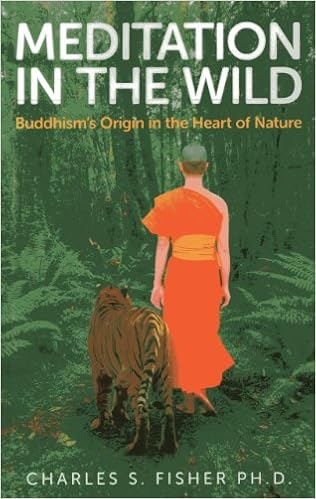
"Buddhism was born in the forests of India. [...] The Buddha found his original revelation while practicing as a forest monk. [...] He developed an understanding of nature which would become part of the remedy he proposed for the problem of human discontent. [...] He chose wild nature - the evolutionary context in which humans arose - as the place to do this. [...] He went to the place in the human mind where there is understanding without words."
The next 315 pages go on to prove his thesis.
Not that it's easy; as a quotation from Theravada scholar Richard Gombrich points out:
"So much of the material attributed to [the Buddha]… is so obviously inauthentic that we can suspect almost everything. In fact, it seems impossible to establish what the Buddha really taught. We can only know what early Buddhists believed he taught."
And this, as it happens, is very different from what we've been told. For example, some of their records maintain that Gautama encountered his famous Four Sights on the way to the forest, where he sat and pondered what he saw. Others suggest that the pivotal debate between Mara and Gautama on the eve of his Enlightenment was actually about the Devil's contention that the young man had no right to strive to end suffering. All those statues of him touching the earth, they contend, depict him saying, "Check it out, dipstick: I'm home. Go find someone who cares."
But outdoor practice was hard – even harder than it is now – with dangerous wildlife and tribal warriors still ruling the outback, and the impulse to organise was strong. Yet The Kindred Sayings of Kassapa show the Buddha "bemoan[ing] the passing of the forest way of life and criticis[ing] those who depart from it"; he may have gone so far as to advocate a straight-up return to hunter-gathering, according to texts that describe his sangha living off the land, hunting game, and never returning to the Red Dust World. The fact that Buddhism spread to new lands precisely as Indian forests were clearcut leads one to wonder what exactly the motivations of those first "missionaries" were. (It also throws intriguing light on the Bodhidharma story. Canon holds that when asked why he came all the way to China to sit under a tree, he replied: "Because this is the best tree in the world." Perhaps his actual words were something like, "Because you still have trees.")
Conjecture aside, the founding generation of Buddhists exhorted aspirants to imitate Gautama literally. Mahakasyapa, a member of the Buddha's inner circle, died a loud and proud hermit, as did no less than Sariputra, of Heart Sutra fame. Finally, reports of early Western observers – Greek travellers – confirm that the first Buddhists were itinerants, without clergy or temples.
But as the movement grew respectable and sedentary, hermits were increasingly viewed as "unsocial, possibly antisocial, and potentially dangerous to established Buddhism." This last repeated pious tales of the Buddha's forest practice, but openly discouraged others from emulating it. Old-school monks, known as "mahallas", were accused of backsliding and dissolution and reviled by the ordained. (Some verses quoted in Wild are stunningly similar to the rant St. Benedict unleashed on Sarabaites and Gyrovagues at an identical stage in Christian history.)
To be sure, over the past 2500 years Buddhist back-to-the-landers have continued to crop up; modern Zen and Theravada are remnants of two such rebellions. Possibly Wild's greatest gift is the two and half millennia of these forgotten reformers it lifts from obscurity. Along the way its author weighs the relative merit of individual cases. He reviews Issa's suburban eremiticism, which echoes most current hermit practices, with guarded approval, but – interestingly – takes Bashō, Ryokan, and Kamo No Chomei firmly to the woodshed.
And that's where I get off the train. In these passages, Fisher reminds me of Thoreau's critics, calling down suspects for claims they never made. His indictment of Bashō does ring, but he repeatedly spins individual innovation in self-directed practices as weak or duplicitous; in the case of Ikkyu, he indulges in crass bourgeois morality. Somehow, in all of his research on us, he missed our core vow: "I will neither take nor give orders." I may raise an eyebrow at others (OK: I do raise an eyebrow at others) but ultimately I have no right to deplore them. Licence to judge is a delusion of the ordained.
But this mild annoyance in no way diminishes the significance of Fisher's work. His journalism is both intrepid and thorough, penetrating the Thai forest lineage – a modern restoration movement – at length and documenting the gradual deterioration of Zen, from Bodhidharma's boldly-planted hermit flag, to the dismissal of 19th century hermit Ryokan (his own beefs with him aside) as a "lunatic". He finishes with an account of his own brushes with eremitical practice (Fisher is not a practising hermit per se, but is attracted to our forms) and a light survey of four contemporary American hermits. All in all, it's the most comprehensive treatment of the subject I've found anywhere.
And I found it impossible to put down. With any luck, Meditation in the Wild will stand for many years as Eremitical Buddhism 101 for sincere students of the Buddha's way.
You know when you're researching a blog article and then you run across something entirely unrelated thanks to Google's arcane search algorithms, but it's so awesome you stop writing about that other thing and write about this one instead?
I love that.
Some time ago I wrote a post about suitable shelters for forest practice. Now I find that some scholarship into that subject
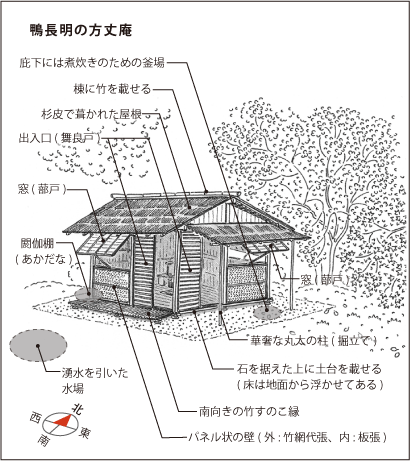
has already been done, thanks to interest in Kamo no Chômei. Buddhist hermit of indeterminate lineage, Chômei is most famous for his essay Hôjôki (方丈記), or The Ten Foot Square Hut. And you'll never guess what that essay is about.
To this day there's a certain amount of fascination with his accommodations among fans. Very few of whom, interestingly, are in the English-speaking world. That the most complete and succinct source I could find was Japanese is perhaps not so surprising, but even the runners-up were German and Hungarian. (One wonders if their appreciation of Chômei might be insight into their cultures.)
Anyway, having perused these blueprints in three languages, I'm prepared to certify them. Chômei's hut looks entirely serviceable, without being excessive, and a fitting counterpart to the similar cribs of Ryokan, Issa, and Thoreau.
But in this little impermanent hut of mine all is calm and there is nothing to fear. It may be small, but there is room to sleep at night, and to sit down in the day-time, so that for one person there is no inconvenience. […] If one knows himself and knows what the world is he will merely wish for quiet and be pleased when he has nothing to grieve about, wanting nothing and caring for nobody.
UPDATE, 21 June 2014: A reader directed me to this excellent video tour of Kamo no Chômei's hut. Check it out!
(Photo of Kamo no Chômei's preserved hut by David Dorsey; diagrams by アトリエかわしろ一級建築士事務所 and Carpe Diem Teaház.)