Showing posts with label church. Show all posts

Thursday, 6 October 2022

The Devil and Bodhidharma

I ran into a Zen axe-grinder on Twitter a few months ago. The experience continues to turn in my thoughts.

I didn't know this guy (I believe he was a guy; if not, my bad) but several sangha there – most of them fellow hermits – did. They just snorted when he turned up again and had little else to do with him. I initially engaged, in good eremitical faith, until he got personal – which happened quickly – and then I ignored him, too.

My brother's holy crusade had something to do with "one true path", of course, as well as a claimed apostasy of Japanese Zen in general, the crystal purity of early Chàn, and a perpetual tantrum over anyone practicing outside the narrow confines he considered "real". A major focus of his rage – and this will surprise no-one who's met the type – was a purported episode that supposedly derailed authentic Zen a thousand or more years ago, allowing evil conspirators to substitute not-Zen in its place ever since.

Part of that Gothic intrigue includes alleged documentary proof that, far from being the iconoclastic solitary we were sold, Bodhidharma was in fact a domestic church boy who kowtowed to canon authority and insisted everyone else do as well. (This would be the Zen equivalent of claiming that Jesus was a well-to-do rabbinical Pharisee.)

All of which was sardonic entertainment for those who'd heard it before; at this stage in Western Zen, we're in great majority converts recruited via informed choice and lived experience, thus there are few of this ilk among us yet. Converts tend to accept the landscape they find; self-declared revolutionaries who radically reconstruct a tradition's history are a hallmark of socially- and parentally-transmitted religion.

It's just that overthrowing the Establishment is no fun if it doesn't net you substantial power, which the Zen establishment entirely lacks in this place and time.

But if the next generation survives us, they'll see more of these people.

So I rate it prudent to reach out to the Great Sangha while the reaching's good, in the hope that younger Zen in particular may, somewhere down the sunset path, ingest a grain of scepticism in their regard.

As I've pointed out, the world already groans with churches, and if all we are is another one, we'd best disband. My Twitter brother is angry; he wants people brought down, chastised. This is churchifying, not enlightenment practice. (I'm reminded of Zenners who "debunk" my hermit practice because I have no living teacher, and even one who met my suggestion that Zen is about sitting rather than service with "Sounds like Mara." Next up: our very own Satanic Panic!)

So they exist, even in Western Zen. And let's face it: to some extent, we are all them. Everyone has that line that must not be crossed, that "Zen is here, not there" litmus spell. If you don't acknowledge it, and atone for it, you're the death of Zen.

There's a cogent Quaker teaching that addresses this issue: "The only way to defeat the Devil is to stop being him." (I hope the maraphobe above also encounters this instruction at some point.)

I intend to use the example of my angry fellow traveller to locate him in myself, remind him why we've given our life to this Zen thing, and whack myself with the invisible kyôsaku I carry for the purpose. 

Because this shit is a waste of energy, in all religions, at all times.

(Portrait of Bodhidarma courtesy of Rawpixel.com and a generous photographer.)

Thursday, 22 September 2022

Good Song: Wide Awake


Here's a good meditation for sojourners my age. Here at the crossroads of life, when most of ours is behind us, and what we have and what we owe comes into sharp focus.

It's hard to miss the Zen implications of the title and refrain. In addition to a gift for a koanic line, Julian Taylor – Canadian son of a Caribbean father and Mohawk mother – also wields a remarkably evocative voice that manages to embrace a multitude of genres and tones. In this case it bears a startling resemblance to Don Williams', blending perfectly with the gentle, introspective lyrics.

Anyway, give it a listen. See if it doesn't resonate with your path as well.

WIDE AWAKE
by Julian Taylor

It's a crazy world that we live in
The tide comes and goes so fast
Right now while I'm trying to be present
I'm still chasing shadows of my past

My father was born in the islands
My mom was born on the great turtle's back
They prayed for me when I'd go out in the evening
At least that's one of the rumours I'd hear

'Round Christmas time spent with my family
Over hot toddy sorrel and ginger beer
They did their best and they did it for freedom
They did everything they ever could for me

We went to church every single Sunday
We'd get dressed up and then go to granny's place
I'd run around that house with my cousins
We loved to race

There is an abundance of hope
That lies between the oceans of time
There's nothing singular about it
Yet it can be clearly defined

And I'm wide awake
I chalk it up to all of my mistakes
And all the heartache that I've had to face
And all the choices that I've had to make in my life

The greatest pictures are never taken
They're all stored in your memory
Me and my mom
We used to go to Good Bites and talk philosophy
We'd sit there just talking for hours

I once asked her why are good memories so heavy
She simply said
Aren't we lucky

And I'm wide awake
I chalk it up to all of my mistakes
And all the heartache that I've had to face
And all the choices that I had to make in my life

Lah-lah-lah-lah-lah-lah-lah-lah-lah-lah

Aren't we lucky
Aren't we lucky

There is an abundance of hope
That lies between the oceans of time
There's nothing singular about it
Yet it can be clearly defined

And I'm wide awake
I chalk it up to all of my mistakes
And all the choices that I've had to make
And all the heartache that I've had to face in this life

Thursday, 19 August 2021

The Sword of Righteousness

Aa shovel01
A few days ago I saw a humorous meme involving Ouija boards on a Facebook group for members of the church I grew up in. The fact that I still have respect for Christianity is entirely down to the religious training I received there, which was deep and reflective, and continues to be an asset to my Zen practice.

But we had a couple of "those" Christians, too.

So it was that the thread underneath contained a few protests and dire warnings about EVIL! and SATAN! and THE OCCULT!!! (They caution writers not to use caps lock and multiple punctuation, but it's dishonest not to when expressing the opinions of those who think in them.)

And this got me mulling the difference between real and fake religion.

In a real religion, you're the idiot in the room. Fake religion confers special knowledge, even superpowers, such as the ability to speak in tongues or handle snakes or see auras. Or even to sit in one position for hours, disregard pain, cure bodily ailments, and look into the souls of others.

In contrast, after practicing real religion you know less than you did before. Stuff you've always hated, you're not so sure about. Uncorroborated beliefs, you're less willing to shoulder. Facile explanations, shallow documentation, scriptural lawyerball, saints and saviours, you eschew. Answers at all become suspect.

You become dumb. The world is big, and you're not. You've spent your life flailing in a dark room, your sword helicoptering overhead like everyone else's, and now you just sit down and wait for reliable intel.

That's what happened to me. After a week of zazen, I knew nothing. Because I'd never known anything. My conversion experience left me small, as small as everyone else. And now I can't unsee our identical smallness.

Blessed with a church that prizes spiritual penetration, and a family that meets rubbish with corrosive sarcasm, I never believed any nonsense about parlour games and witches and backward rock music. But these days I'm considering the larger issue.

A true faith practice isn't about becoming an expert in special dimensions or states of consciousness or planes of existence that the uninitiated can't see or understand. We have teachings about that sort of thing in Buddhism, too, and my take on them is a convicted "whatever". Because I won't be distracted by trivia.

And that's the difference.

In fake religion, you strive to fill your mind with as much crap as possible. Those with the most crap, are the most accomplished.

In real religion, you strive to empty your mind of crap.

And the true disciples are those still shoveling.

(Photo of the Sword of Righteousness courtesy of Anthony Appleyard and Wikipedia Commons.)

Thursday, 24 June 2021

Our Worst Nightmare


This week I learned two things:
  1. that something called "the Buddha-like mindset" is trending among young people in China and Japan, and
  2. it's largely condemned
The phrase "Buddha-like mindset" – or Chinese and Japanese phrases so translated – refers to a tendency among those nations' youth to eschew lifestyles dedicated to amassing status symbols and winning the approval of others. It dovetails with a new tiger-free parental attitude that Simon Fraser anthro prof Jie Yang sums up as "there are not that many kids who will really amount to much, so why give them an exhausting childhood?"

Instead, these mostly male kids are said to grow up shiftless and solipsistic, never making it in the work world, devoting their lives instead to their hobbies, pets, and interests.

Most alarming to cultural gatekeepers, they're also swearing off women. Insofar as courtship is the most grueling of society's approval rackets, these young-to-middle-aged men buy back their sovereignty and peace of spirit by simply Bartlebying that mofo.

All of which is a precise description of me. Or has become, any road.

Of course, as Wikipedia points out, "Although it is inspired by the Buddhist guidance to become satisfied through giving up anything tied to avarice, it is not a Buddhist principle." It is, however, predicated on conventional Zen teaching. To wit, as another source in the WP article puts it: "It's OK to have, and it's OK not to have; no competition, no fight, no winning or losing."

But in fact, in a twist partly reminiscent of Western "lifestyle Buddhism", few adherents actually follow Buddha-like mindset into any spiritual practice. (China's Communist ruling class is turning back flips over it all the same, officially for ideological reasons, but more likely for political and economic ones.)

And really, in the end, it's not surprising that the lions of these Asian societies are greeting this improbable teenage fad with consternation.

Just imagine the atomic tantrums we'd pitch in the Christian West if our kids suddenly started emulating Christ.

While simultaneously rejecting the authority of the Church.

I dare to venture this would be the single worst nightmare we've ever faced.

(Photo courtesy of Ian Stauffer and Unsplash.com)

Thursday, 10 June 2021

Good Cartoonist: The Naked Pastor

I'm just catching up with David Hayward, a cartoonist who has published under the provocative nom de guerre of The Naked Pastor for at least 10 years. His work, which draws on the inconsistencies of Christian practice, is refreshingly unblinking. It's also entirely transferable to Zen, and perhaps one or two other religions.

But what makes David's thoughts truly unique is his insight into the fundamental potholes encountered along everyone's road to enlightenment

Witness above illustration.

In this panel, ostensibly fingering Pastor Fred Phelps of the Westboro Baptist Church [godhatesfags.com - yes, really], we see a scowling human brandishing a sign that reads I HATE. Religious affiliation autocorrects this to GOD HATES, as indeed it always does, from which it's a short jump to GOD HATES FAGS, because malevolence can't exist without a target.

Ha-ha! Take that, Christians!

But wait… We're not done?

Nope. Could the sign now – just two hops in – say GOD HATES FRED PHELPS? Why yes, it seems to. And in case we thought we'd found a back-door out of this embarrassing development – maybe God just hates Fred Phelps because Fred promotes self-righteous Christianity – nope again. GOD HATES FRED PHELPS WHO HATES FAGS.

Well, crap. Turns out we (I mean God) hate Fred Phelps only because Fred annoys us. Now see here, sign person! You're clearly part of that big ill-defined group of people who are destroying humanity and making these the most immoral times in all history, from which we can never be saved!

Which is apparently exactly the case, because now we're carrying a sign that says GOD HATES EVERYONE. (Hold up… how did we end up carrying the sign?? I thought this was about Christians!)

OK, we've done it now. Unless we're psychopaths we can't help but realise, whether we admit it or not, that going around with a metaphorical bomb vest on is the off-ramp to Hell. And that means, of course, that GOD HATES ME.

Which, since those two are really the same person, means I HATE MYSELF.

Basically, that's all I am now: I HATE.

That is, GOD HATES.

And now He needs someone to hate. Let's see who's available…

And you're going to keep going around and around like that until you get down off the basswood horse and step off the carousel. Simply changing horses won't do it, nor will riding on the parental benches. (Side note: are there still carousels out there, with gilt and mirrors and calliopes and parental benches? Or are they all passed on to the Allegorical Hereafter?)

It's these cartoons that raise David above other internal critics of hypocritical churchmanship. Aside from the fact that most of his Jesus cartoons work just fine if you make them Buddha cartoons, he occasionally reminds us outright that he's not necessarily talking about Christians at all.

Which probably means that at this very minute one of us is out there printing GOD HATES DAVID HAYWARD on a sign.


(Cartoon from Feedly.)

Thursday, 18 March 2021

Zen At War... With Itself

Singing Bowl from Nepal

'Way back in March of 2012 CE (how strange to have such a deep vault) I reviewed Zen at War, Brian Daizen Victoria's exposé of Japanese Buddhism during the Second World War.

And now, these many years gone, while looking up the book's Amazon link for a friend, I happen to glance at the reader reviews.

Some of them are disheartening.

While most commenters shared thoughtful, supportive responses, I rate it worthwhile to meet two others, not by way of defending Daizen's work – it's self-defending – but to survey some dangerous internal trends in our incipient Western religion. Especially here, where our grasp of Buddhist history (and our own) is tenuous.

First to catch my eye was a one-star rating entitled "Very disappointing":
This guy [Daizen] must have a terrible background, probably tried to escape all that trauma by moving to far east and becoming Buddhist etc., the classic story. It's ok as long as one does not try and contaminate beautiful Zen with a messed up mind. Avoid this book especially if you're a new Zen learner as it will ruin the whole experience for you.
There's something simultaneously amusing and infuriating about a self-professed Zenner who has no idea what a human being is. While I assume First Honoured Sangha is a sojourner, I've also met so-called "masters" who lack any greater insight.

So to protect any fragile new Zen learners who may stumble upon such spluttering, Ima lay down some tough-dharma. (Ten thousand apologies, pro forma trigger warning, how's your father.)

1. First Honoured Sangha has no calling to judge others or analyse their lives, or to declare their fate foregone. (Gotama; Dogen; Jesus.)

2. First Honoured Sangha knows nothing about Daizen's "classic story". We all have classic stories. Even First Honoured Sangha. (Gotama; Claude Anshin Thomas.)

3. First Honoured Sangha has no authority to give permission, or withhold it. (Gotama; Jesus.)

4. First Honoured Sangha has not been asked to guard the supposed "honour" of Zen. Zen is clean by its nature. Others soil it. (Bodhidharma.)

5. If First Honoured Sangha can't put down the burden of piety, then First Honoured Sangha can haul his or her prodigal backside back to the Church. If we must speak of contaminating Zen, piety is certainly the ultimate pollution. Mindless fear and shame are what authentic Zenners strive to overcome.

In an oddly similar vein, consider this (ostensibly favourable, five-star) review:
The shock value is not so great, as I've been aware of the basic contents for sometime. Japan is an island and the Japanese are an insular people. The emphasis in their culture is group conformity. Zen is not the transformer of personality as it was once marketed, and it should not surprise us to learn that Zen leaders in Japan followed the lead of the Japanese government and Army into widespread war.
The endemic racism and ethnocentrism of Western Zenners never ceases to dumbfound me. It's not just that we dissuade those of African or Hispanic or Arabic origin from joining us; we even freeze out Asians! With the exception of a dwindling handful of deified Asia-born teachers, you see damn few Asian faces in Western Zen centres.

Seriously, brothers and sisters. We have a problem.

One that won't go away until we drive it bodily from the zendo and kill it with ferocious blows from our monk sticks.

Apart from the sort of blanket condemnation First Honoured Sangha called down on another entire vaguely-defined demographic, Second Honoured Sangha neatly excuses Westerners from suffering any angst over Daizen's thesis. The demon, we're assured, isn't the Sangha; it's the Japanese.

With respect, Second Honoured Sangha is mistaken.

The demon is the Sangha. All of us. Then and now. There and here. Present and future.

You and me.

Nor am I alone in my discomfort with the unBuddhic habit of associating practice with submission to dictatorial authority – and then absolving ourselves of the evil we do under it. Thus, Third Honoured Sangha:
What I don't like, is the way it is almost impossible to discuss [enthusiastic Buddhist participation in Japanese fascism] in the Zendo, and I've tried.
Word.

And a final Fourth:
As a Buddhist, it was a reminder that we must be ever looking at our own practice. Do read this book.

Zen is important. We must resist the urge to turn it into a church.


(Photo courtesy of Serg Childed and Wikimedia Commons)

Thursday, 23 May 2019

I Want, I Fear, I Surrender

I learned this meditation from AJ Smith of Restoration Church, an urban Evangelical congregation in Philadelphia featured on Gimlet's Startup podcast. In a moment of self-doubt and uncertainty, AJ engages this mantra, which I gather is fairly common to seekers on his path.

"I want, I fear, I surrender" has a definite Insight ring, don't you think?

If "surrender" seems a little New Age-y, we can always substitute "accept". That formula you could easily sell as straight from the Ancestors, and none would be the wiser. (Hey, wouldn't be the first time.)

Anyway, I think this is a powerful meditation for those moments when you're paralysed by anxiety. Or just as a technique for confronting the koan of anatta.


(Photo courtesy of Nagesh Jayaraman and Wikimedia Commons.)

Thursday, 8 November 2018

America Needs a Buddhist President

Back in the Duhbya years, a little book called America Needs a Buddhist President appeared on bookstore shelves. It consisted of a poem by Brett Bevell, illustrated with whimsical drawings. (The author's spoken word performance of the poem can be found here, though some of the humour is lost without the cartoons.)

It's light entertainment, but I thought about the premise a lot when it came out. The text plays on Buddhist stereotypes (that we're martial artists, that we're vegetarians, that we eschew contention), often for laughs. But not always; some assertions ("America needs a Buddhist president whose mind is free from desire") are downright revolutionary. And correct.

But the self-congratulatory aspects of some lines brought to mind the claims of Christians in this society where they dominate. That they worship the Prince of Peace. That they're forgiving. That they protect children.

Anyone not completely craven instantly sees through these lies.

And that's why I don't think a census-form Buddhist would make America a better place, either. A real Buddhist, now… But let's face it, a real Buddhist wouldn't even enjoy the support of fellow Buddhists, let alone voters of other confessions. Because a real Buddhist would fail to endorse cynical alibis for unBuddhist ambitions. And that would make us hate her.

But the greatest opening I had, meditating on Bevell's thesis all those years ago, is that I don't even want a Buddhist president. I'd be ecstatic – in tears, even – if America had a Christian president.

I mean an actual Christian. Not a marketplace Christian, or a dog-whistle Christian, or a church-going Christian, but a genuine contrite, practicing Christian.

If such a Christian presented himself for office, I would drop everything and volunteer for his campaign full-time. I'd doorbell tirelessly. I'd hand out leaflets 16 hours a day. I'd say to everybody I met: "Look at me! I'm a Buddhist monk, and I'm volunteering for this guy full-time! You need this guy! We need this guy! VOTE FOR THIS GUY!"

'Course, if a Christian ran for President of the United States, he'd almost certainly be assassinated before he even got out of the primaries.

Because that's what happens to real Christians.


(Graphic of undetermined provenance.)

Wednesday, 16 August 2017

WW: Meditating Christians


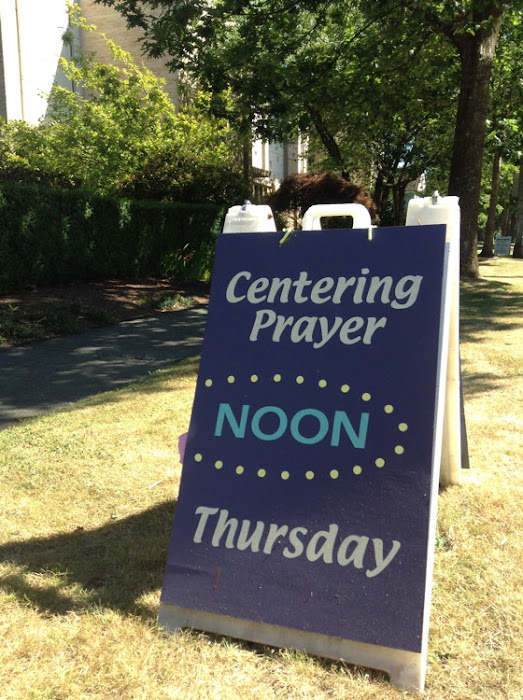
(Was walking by the church I grew up in when I saw this sandwich board on the sidewalk outside. Centering Prayer is one of several Christian contemplation movements that are quietly but consistently gaining adherents. For my experiences in another, see this.)

Thursday, 15 January 2015

Shock and Awe

Tumbled gemstone pebbles arp One of my Franciscan brothers in Québec, a friar named Henri, presented seminars on Christian practice to groups of Catholic seniors – of which he was one. He spoke on many topics, but his most popular lesson began with him passing out polished rocks purchased at the dollar store. He then read the opening verses of John 8 – the oft-quoted and roundly ignored Gospel passage wherein Jesus intervenes in the case of a convicted adulteress, subject under law to death by stoning. "He that is without sin among you," he says, "let him first cast a stone at her." From there Henri brought the teaching forward, pointing out at last that we all possess the Christ-like power of not-throwing.

Henri was a quiet-spoken man, with a gift for landing a point, and he quickly became famous across the province as « le gars qui fait le truc avec les cailloux » ("the guy who does that thing with the rocks"). His main point was that we all carry a rock through this life, and whereas throwing it is a mean and menial act, not-throwing it amounts to a kind of superpower; in a world where we have virtually no agency, we can always do this, to devastating effect. And no-one can stop us.

At the end of the seminar Henri sent everyone's stone home with them, as a reminder of their potential for violence, and their power to contradict it. (On a touching note, some attendees, aware that the Church in Québec is in financial distress, tried to give theirs back, so he could use it in another talk. Henri assured them the Church could still afford rocks, and they'd do greater service to keep it and remember why.)

Proof of Henri's impact came when he encountered former participants, often years later. Many told him they still had their rock, on their dresser, night stand, bathroom or kitchen counter, or dashboard. More than one reached into a purse or pocket and produced the very one; they'd carried it with them everywhere since that day.

I thought then, and I think still, that weaponising not-throwing is a remarkably Zen concept. And so I share it with you today. Indeed, I say we go Henri one better: let us each not-carry a proper Zen stoneless stone through this delusional world, and not-fling it with blockbusting shock and awe at the drop of a hat.


(Photo courtesy of Adrian Pingstone and Wikimedia Commons.)

Thursday, 8 May 2014

Hermits Wanted

Katskhi Pillar

We need hermits. OK, it's a self-serving point. But trust me: leave it to the priests and temples alone, and they'll botch this thing.

Corporate religion always warps the founder's teachings, which invariably urge individual atonement and transcendence, into a trophy-collecting expedition. Hence the uniform, the command structure, and the litmus.

That last conjures enemies. Collective religion needs these, and it needs them everywhere.

That's why we always live on the brink of Revolution, the great cosmic victory, prophesied of old, that will literally change the universe. (And will somehow be brought about by us microbes, through our thunderous obedience.) Every generation, in all ages, lives in the End Times.

At least our Zen jihad is usually a personal one. We've resisted second-comings and arhats, and at least in the West, our politics are generally not diametrically opposed to the Buddha's. But dungeons and dragons lurk even here. In Zen centres I've heard praise of "relics" (including "relics of the Buddha", a phrase my hermit tongue cannot pronounce), and breathless accounts of what must honestly be called sainthood, attributed to Thich Nhat Hanh, Seung Sahn, Suzuki-roshi, and any number of local gurus. These teachers would, I am heartened to think, quash such talk, yet the craving for deities remains. Can charisma be far behind?

The danger is real. One has only to consider Christianity, now so buried in augury, Bible-babble, and gothic conspiracy that Christ himself has lost all credibility in the larger culture. In such times a Christian hermit, churched by the Spirit alone, might preach at risk of his life.

Fortunately, we Zenners do little scripturalising. We seldom declaim verses on one another, even when we work violence on one another, and since World War II have not lawyered obscure sutras into cynical stratagems.

But we do live constantly on the verge of "enlightenment", which state we could immediately reach if only we would submit more completely to another person's will. We kick others for eating meat, for having sex, for breaching the latest liberal shibboleth. We kick ourselves, too: for not sitting enough, or right; for losing our temper, or our faith; for giving – or bearing – too little. And most wretched of all: for honouring our own nature over ordained authority. And in that we are precisely identical to every other church on this blue planet: turning away from our liberating practice, and embracing comfortable conventions.

And so we need hermits – a sunburned dervish, a naked fakir, a hemp-haired Hebrew prophet – to remind us what practice really is, and the true nature of enlightenment. Therefore (one sec while I pull on some sackcloth…) say I unto ye:

Hear me, O Zion! It happens when it happens. You can't make it happen, you can't predict when it happens, and you probably won't even know when it happens. But happen it will. On its own and by its own, with you or without you, because of you and in spite of you, whether it vindicates you or shows you for a fool.

And let's cut the crap: it's gonna show you for a fool.


All peace and success to the Nation of Seekers.


(Photo of Katskhi Pillar courtesy of ლევან ნიორაძე and Wikimedia Commons.)

Wednesday, 7 August 2013

Thursday, 3 March 2011

Choice

(The following is an excerpt from "Rough Around the Edges: A Journey Through Washington's Borderlands." Copyright RK Henderson.)

Because the choice is ours.

Many years ago, when I was a student, I entered a supermarket. A lady stood out front with a coffee can, collecting for charity. She was a cheery sort, a plump, maternal woman with a rosy Anglican face.

Ahead of me strode a man in a green coach's jacket. "Would you like to give to the Church relief fund?" she asked.

His voice had all the silk of a snow shovel on wet asphalt.

"I was poor all my life, nobody helped me!"

Taken aback, the churchwoman bobbed, and he stalked past, shoulders hunched, fists jammed in his slash pockets.

I never saw the man's face, but his greying comb-over and spare tire are stamped on my mind.

I should have pulled out my grocery money, a single twenty, and handed it to her right there. I should have said, "Here's ten for me," and dropped it in her can, "and ten for him." But I didn't. In the moment, all I could think to do was raise an eyebrow, as who should say, "No good deed unpunished, eh?", and keep walking.

But the guy bothered me. He was rude. He was ungrateful. He was angry. It was years before I solved his riddle.

You decide what it does to you.

You don't decide what happens. When you're born, where you're born, who you're born, how you're born. Land slides, fields flood, markets crash, families fail, houses burn, dogs bite, lovers leave, people die. Dashboards dash and draught boards draught.

You take a number and you watch the wheel. Same as us all.

But you decide what it does to you. Whether it makes you hard or soft. Hot or cold. Mean or mindful.

Poverty doesn't do that. Pain doesn't do that. Heartbreak doesn't do that.

You do that.