Showing posts with label Scotland. Show all posts

Wednesday, 20 August 2025

WW: Scottish thistle


(Emblem and patron of my father's people, as any who know us will understand, this well-armed weed flowers in surpassing beauty on the North Coast this time of year. Hated invader notwithstanding, compromising pastureland, and misguidedly considered coarse and unseemly.

As are we.

Cirsium vulgare; though this being the avatar of Scotland, disputes abide over which exact species is truly the authentic Scottish thistle, amongst the many, well... er...

pretenders.)


Appearing also on My Corner of the World.

Wednesday, 24 January 2024

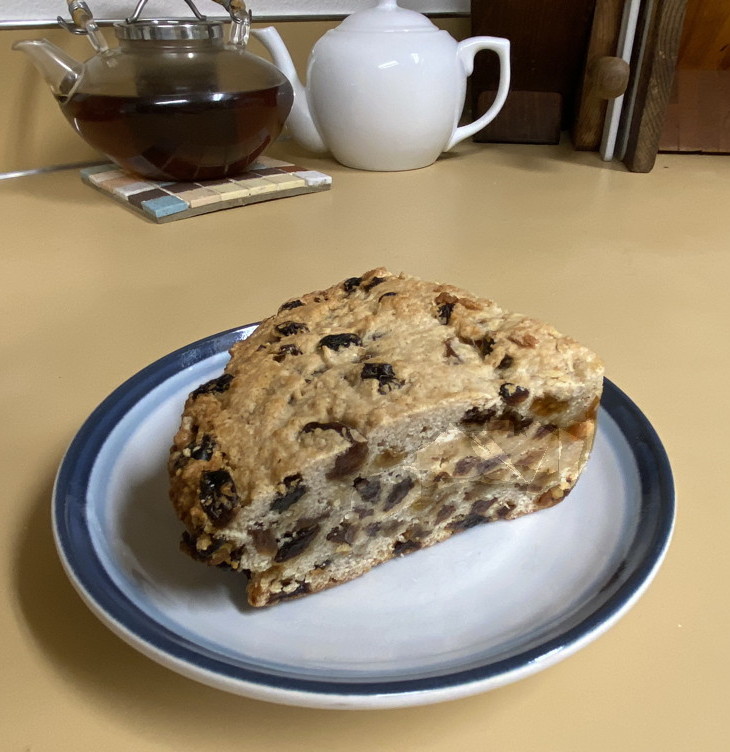
WW: Bachelor cake


(Last of a traditional Scottish bachelor cake that I baked for Christmas. First time in 30 years. Still just as good.)

Appearing also on My Corner of the World.

Thursday, 28 October 2021

A Lament For Graveyards

Caledonian Canal from Tomnahurich Cemetery
I augur this the right moment to mention my regret at the passing of graveyards, which ironic development has left my society impoverished to a few woeful degrees.

Many of these are practical. For starters, a cemetery contains a wealth of historical data not easily acquired else. Just the demographics are a treasure. Where did past inhabitants come from? What religions did they practice? What organisations did they belong to, and what was their mission? What light does this shed on the present community? What have we lost? What gained?

In a cemetery you're surrounded by the final statements of multiple generations, reflecting successive changes in values and perspectives. Whenever I move house, one of my first outings is the nearest graveyard. An hour or so and I've got an earthier, more visceral understanding of where I am, more tactile, if not easily quantified, than the one I'll get from the local history books I'll study next.

Burial grounds encode a lot of culture, and if you're paying attention, the whole site, properly examined, amounts to a book in itself.

Then there's the simple peace of the place – the leafy green, the tranquil refuge from the fretting living. I've often botanised and foraged in cemeteries, as being mostly uncrushed by the pounding fist of development, and am especially fond of them as a mushrooming venue.

And of course, there's the sacredness of remains, an instinctive, non-religious kind of consecration we've never fully replicated. (Some cultures – First Nations, Catholic-majority societies, traditionally Buddhist peoples, Celtic homelands – find similar awe in sites that don't contain reliquaries, but industrial values have undermined even their ability to transmit such reverence to recent generations.)

Institutional Zen, in its Confucian attachment to human authority, practices a heretical adulation of the dead – disturbingly, even of pieces there-of – and while I'm reflexively uneasy with this, I do wholeheartedly embrace the sangha of the past as an indispensible source of companionship and insight. Their presence is felt strongly in cemeteries.

Still – speaking of irony – no-one on either side of my family has been interred for 70 years, making us yet another cause of death to the dead. The usual suspects are afield: the extreme expense of burial, for the most part, but also a callow, pseudo-logical insistence that we've no need of graves to honour and remember our loved ones.

Which is, of course, tripe. I would in fact greatly cherish a grave where I could visit my parents and grandparents, and the dear regretted friends now leaving this world at ever-greater rate despite my pleading insistence they reconsider.

No, the nondescript region where we will scatter my mother's ashes will not replace her grave: that specific plot of ground where what's left of her articulated body would drift toward new and different existences under a solid square of stone that I can see and touch.

Not even almost.

And as I myself will also receive no such treatment, I must eventually commit the same sin of cenotaphery, and drive yet another nail into the coffin of, well, coffins.

Not that I'd impose a traditional burial on my survivors, of course. I get it; things have changed. And although I accept that as a Zenner, I do much regret my headstone. Because I've got the most awesome epitaph ever:

"Nothing is carved in stone."

How happy I'd lie below such a koan.

Good hunting to all of us on this, the annual Druid crusade to keep the dead dead.

(Photo of Tomnahurich, my favourite graveyard to date, courtesy of Derek Brown and Wikimedia Commons.)

Thursday, 24 December 2020

Christmas Memory

View of a frosty evening through a window on a Scottish farm

On this Christmas Eve in the ninth year of Rusty Ring, we wish all Aeruginosists near and far the most peaceful of holidays.

(Photo courtesy of Michal Klajban and Wikimedia Commmons.)

Wednesday, 22 January 2020

WW: Bagpipes


(Needed to do something with the empty plastic bags I had floating around, waiting for an assignment. A couple of hours at the workbench, and here's my solution.)

Thursday, 17 October 2019

Product Review: Harry's Razors.

Five years ago I got tired of paying the ridiculous prices razor blades command these days. As trivial as that sounds, like many Buddhist monastics I shave my head on a regular basis, and the cost adds up. I'd also heard that Internet-based businesses were popping up to service the growing general demand for relief.

It was just about that time that promos for Harry's Razors began running on the Cracked podcast.

Their product was said to be competitively priced. It was also said to be good; better than the storebought twin-blades I'd been using. The podcast host assured us he'd been using the starter kit the company had sent him, and it had changed his life. Or at least his grooming.

So I ordered one.

To say it also changed my life, in a small but significant way, is no exaggeration. That's why, in the interest of supporting others' practice, I'm sharing my experience here.

Harry's Razors, which mount on a high-quality handle that probably won't need replacing before my descendants are my age, feature four ganged blades in a flexible head that conforms remarkably well to face and scalp. You just lather up as usual (I use a particular kind of hand lotion, because it doesn't dry, works in cold water, and is made to nourish skin) and have at it. My head-and-face routine, which used to take 45 minutes, now takes 20(!).

What's more, I rarely get nicked – anywhere – with Harry's. (See elaboration below.) That's down to the bendy head, which nails the sweet spot between too stiff and too floppy. The result is full control, with just enough forgiveness to keep you intact, as long as you proceed with ordinary due mindfulness.

Finally, the blades are in fact competitively priced, especially if you shell out for the big 16-blade box. It'll set you back $30 Yank, but that works out to $1.88 per blade, or between 24 and 31 cents a shave, if you preserve the blade by drying it thoroughly each time you finish.

That's cheaper than name-brand twin-blades, for a much better shave.

Which brings me to my other reason for writing. My last shipment came emblazoned in several places with a strident "NOT FOR HEAD-SHAVING!". This alarmed me, since the whole reason I use Harry's is that it's perfect for head shaving. I'd even sent fan mail to the company soon after I discovered their product, thanking them for marketing the tool that we Buddhist monks have been waiting for, and was told in the reply that head-shavers were a demographic the company was particularly keen to reach.

Has something changed?

I checked out the thing online, and found to my dramatic lack of surprise that Harry's has indeed become a fetish among head-shavers. Some of these were similarly worried by the new turnabout, while others assured them it was all a pack of nonsense, cooked up to deflect some unspecified liability threat.

Well, the new blades looked and flexed like the old. I chucked one up and fell to.

Same fantastic Harry's shave. Face, neck, and head.

In the interest of full disclosure I must say that over my five Harry's years I've drawn blood twice, both times on the head. One was so trivial it scarcely bears mention; the other less so. But the telling bit is that in both cases I was hacking away like a Japanese chef, just 'way too impatient and irresponsible to expect Harry's to pay me a living pension for this. And that second incident involved not only the afore-mentioned Ginsu schtick, but also a worn-out blade that a less Scottish monk would long have discarded.

And hey, if it's campfire stories you're into, I can rummage back over the 35 years I was a twin-blade man. The fact that I can recall and enumerate the times I've got into trouble with Harry's tells you everything you need to know about their relative safety. Head or no head.

So I don't know why Harry's has suddenly turned head-shavers loose. Fact is, Hairless Brothers the 'Net 'round have been lauding this product since it came out, and I don't recall a single sour note.

Anyway, here's the deal: boy, does this thing work. And it would be disastrous if head-shavers didn't know that, because shaving your head is a pain in the butt. (Acupuncture thing, I guess.)

Just don't sue Harry's if you manage to slice an ear off.

Or me. Because that would be a very dodgy business decision.


Thursday, 28 June 2018

The Flat Earth Koan

Paisley Abbey gargoyle 10

"Fifteen hundred years ago everybody knew the Earth was the centre of the universe. Five hundred years ago, everybody knew the Earth was flat, and fifteen minutes ago, you knew that humans were alone on this planet.

"Imagine what you'll know tomorrow."

Agent K
Men in Black

(Photo of Paisley Abbey gargoyle courtesy of Wikimedia Commons and a generous photographer.)

Thursday, 24 November 2016

Pháp Dung's Timely Teaching

Meditation (17451472849)
I'm not much of a rock.

As a Zenner I aspire to be unmovable. Fudo Myō-ō, the patron of my practice, has made a career of it. And I often exhort others – principally here – to remain calm, to look deeply before acting, to avoid multiplying suffering by making a bad situation worse.

In the blogosphere, no-one can see your hypocrisy.

The fact is, I have a warrior spirit. I want to horse up and ram a swift lance through as many jerks as I can jab before one of them takes me out. Call it an ethnic weakness, but I am by nature a doer, a get'er'doner, and especially a defender. When arrogant pricks start kicking folk around, my first impulse is to cut them off at the knees.

Literally, if possible.

Which means that recent events have handed the monk I decided to be fourteen years ago a steep challenge. By way of meeting it, I've largely withdrawn into meditation and monastic discipline these last weeks, to sit with my conflicting values. If you were to ask me what honour demands in these times, depending on time of day you'd either hear, "Look deeply, understand, and proceed like a grown-up," or "Behead the mofos."

I'm working on that second thought.

And in that task I've greatly been helped by this Vox interview with Pháp Dung. As a senior student of Thich Nhat Hanh, he's received a great deal of training in mindful activism (a concept that conventional Zen considers oxymoronic, but one that Thich Nhat Hanh founded a lineage upon), as well as holding his ground under fire.

As I've found the student as lucid as the teacher, I pass his teaching on here to brothers and sisters who find themselves in the same dilemma.

I guess anybody can be a Buddhist when it's easy, eh?


(Photo courtesy of Moyan Brenn and Wikimedia Commons.)

Thursday, 23 June 2016

Hermitcraft: Fucus

Though delicious, Fucus (FYOO-kuss) has a marketing problem. The genus sounds like some kind of fungal disease; its common names – rockweed, bladderwrack – are hardly better. But once you've tasted it, nothing else will do.

Fucus is a distinctive, prolific seaweed, readily identified by the yellow-green "mittens" at the end of each frond. These endear it to children, who love to pop them. Incredibly tenacious, bladderwrack thrives in the harsh upper tidal zone, and is therefore accessible at all but the highest tides.

This remarkable alga, adapted to long, thirsty stretches high and dry, will keep for a week or more in the refrigerator. Used fresh, it lends nutrients and a suggestion of shrimp to sauces and soups. The flavour compliments tomato bases especially well.

Fucus also dries readily, dwindling to unrecognisable wiry black shreds that spring miraculously back to life after a brief soak. (It's also one of the rare marine algae that bear up in fresh water.)

Dried bladderwrack can be lightly toasted and crumbled on salads and baked potatoes, for mock-crustacean tang. Eaten as a snack chip, it goes surprisingly well with a crisp blond beer.

Fresh Fucus is a powerful source of Vitamin C, while protein accounts for up to 25 per cent of its dried weight. In the past, bladderwrack tea (see below) was taken for goiter, a painful swelling of the thyroid glands occasioned by iodine deficiency – yet another Fucus asset. Full-spectrum nutrition also made bladderwrack tea a traditional, if ironic, response to both starvation and obesity in Scottish fishing villages.

On the scientific front, modern studies have found that Fucus extracts reduce plasma cholesterol in rats, are an effective anticoagulant, and may even be useful in treating radiation poisoning.

The resilience of this vinyl-looking weed means that you can often gather heaps of it from the beach after a storm; if sufficiently fresh, all it needs is a vigorous wash and you've got pounds of delicious food. (On sand beaches it can be difficult to get the grit off those sticky clusters, but I just dry them on a clothesline and bag the result. What sand survives washing and drying collects in the bottom of the sack.)

But do check for barnacles and epiphytes before collecting a washed-up clump. In the open sea bladderwrack often plays host to a variety of other life forms, and is increasingly likely to be encrusted the further out you get from new spring growth.

In calmer waters, where Fucus blankets logs, pilings, and rocks, you can simply snip fronds from the growing plant, leaving the rest intact. Because it grows so densely you can gather quite a bit this way in little time, with minimal impact to the community.

So give Fucus a try on your next beach trip. Those who get past the name(s) soon come to appreciate its true beauty.

A few recipes:

o Bladderwrack Tea

(This "tea", which tastes more like a seafood stock, is savoury and satisfying.)

Steep 1 tablespoon of dried and toasted Fucus in a cup of boiling water, or four tablespoons in a pot, for about 10 minutes. Strain and drink.

Typical amendments include soy sauce, black pepper, lemon juice, hot sauce, and malt vinegar. My favourite: seafood cocktail sauce. (A smooth variety, without pickle chunks.)

The leftover leaves can be used in cooking.

o Bladderwrack Breakfast

Slice up some bacon or sausage and fry it soft. Pour off the fat that pours off.

Add minced garlic and chopped onion.

Add chopped fresh Fucus. (Make sure to slice the mittens in half, or they'll explode in your face.)

Throw in a diced tomato, or canned equivalent. In the absence of these, I use tomato juice or sauce.

Sauté till the bladderwrack is bright green and tender. (Bear in mind it'll always remain al dente.)

Grind in some black pepper and serve over rice, or as a side dish with eggs, hash browns, etc.


Wednesday, 22 June 2016

WW: Scottish breakfast


(Four scrambled eggs, two bannocks, and a grilled tomato.
The breakfast that built an empire.)

Thursday, 10 March 2016

Forth Bridge Koan

Forth Bridge Misty Mono (15137389978)


An English, Irish, and Scottish steelworker are sitting on the Forth Bridge, lunchboxes in their laps.

"Stike 'n' kidney pie, stike 'n' kidney pie," grumbles the Geordie. "If there's anoatha stike 'n' kidney pie in this lunchbox, I'll jump!"

He opens the box. "STIKE AND KIDNEY PIE!" he screams, and throws himself off the bridge.

The Irishman doesn't notice; he's too fixated on his own misery. "Bacon 'n' cabbage fer breakfast," he growls. "Bacon 'n' cabbage fer supper! Sure, if dere be bacon 'n' cabbage in dis lunchbox, Oi jump!"

He opens the box. "BACON AND CABBAGE!" he screams, and throws himself off the bridge.

The Scot, none the worse for finding himself alone, mutters, "Haggis 'n' neeps, och how Ah hate haggis 'n' neeps! If Ah see haggis 'n' neeps in this lunchbox, right then: Ah jump!"

He opens the box. "HAGGIS AND NEEPS!" he screams, and throws himself off the bridge.


Two days later the widows meet at the funeral.


"If only," sobs the Geordess, "if only I'd packed soomthin oatha than stike 'n' kidney pie, me Nigel'ud still be alive!"

"Sure!" agrees her Irish sister. "N'if only Oi'd not made bacon 'n' cabbage, just fer the day, me Seán'd still be with us!"

They turn to the Scotswoman, expectant.

"Well dinna luik at me!" she snaps. "Ma husband packed his ane lunch!"


(True story.)


Wu Ya's commentary: "A good tenzo is worth his weight in gold."


(Photo of the Forth Rail Bridge courtesy of Chris Combe and Wikimedia Commons.)

Wednesday, 1 April 2015

WW: The well-armed eight-year-old

(I built this toy gun when I was in Grade 2, nearly 50 years ago. Only a Scottish kid arms himself with a flintlock.)

Friday, 19 September 2014

There's a River Crossed

Inverness Ness Footbridge 15760.JPG

Well, it's happened.

The outcome was exactly as I guessed, though it doesn't bring me any satisfaction. As a Canadian, I'm too familiar with separation referenda. It's difficult to get folk to secede from what they've known, unless they're being rousted out of bed by soldiers, imprisoned, and tortured. (Hello, Ireland!) But it's like the Scots to be game for a go on pure conviction; the fact that the nation was up to it speaks volumes. Too bad I couldn't be there; as I understand it, Canadian residents were invited to vote.

I'm impressed by the lack of newsreader second-guessing, constant updates on "who's winning", exit interviews, and the whole democracy-negating circus we North Americans put up with. Scottish voters were left in peace to make their choice. "Envy" doesn't begin to cover it.

Nor has the Scottish initiative been as cruel and hateful as Québec's was in 1995, an experience that left both sides so traumatised, still twenty years later, that the PQ have never been able to muster the political will to try it again. The SNP have promised they won't hold the nation and Union hostage to endless rematches in the coming years, and I heartily recommend that Yes cleave to this pledge. Trust me, it's brought nothing but damage and stagnation to Québec. (And I say this as a Québec nationalist.)

I was particularly struck, while avidly following the news from home via livestreamed radio, by the Yes movement's welter of voices: Irish; Australian; Canadian; English of many stripes; and a Babel of accents from non-English-speaking countries. One Yes organiser I heard on Radio Scotland was a Pakistani Muslim; another on the Scottish Independence Podcast was American. So proud am I of my father's people, that I've been irritating my Facebook friends with it even more than usual. (By the way, the most in-depth coverage I found consistently came from BBC 4; better than any Scottish station, in fact. Somewhere in there is reason to be thankful this happened in the UK, and not somewhere else.)

Any road. As we launch into the next phase of our history, let's get something straight: the Yes loss is a giant win for the Union, which stood to lose not merely a large part of its people, but the best one. The Scots are a people of the future, who can't be trammelled by broken-down notions of nationhood and justice. This train is steaming forward. It's get on or get left.

Indeed, any who may gloat at the SNP defeat may have cause to wish we'd gone after all by the time we're done. As my father said forty years ago: "The world isn't ready for an independent Scotland." Nor, I suspect, are many within the Union ready for the renewed, activist nation that Scotland has become. Show me another nationalist movement, anywhere, that speaks in so many accents, and I'll recant.

Aye, UKIP. I'm talking to you.

So, best to Scotland for the future, near and far. And all those promises we heard before the referendum, all the things Westminster was going to do, if only Scots voted No? Well, it's happened now, hasn't it?

So it's time for a reckoning. Or raise hell if they don't.


(Photo of Ness Footbridge, in my old hometown of Inverness, courtesy of Hartmut Josi Bennöhr and Wikimedia Commons.)

Wednesday, 17 September 2014

WW: Scotland rocks!

(No politics here; just my blanket wish for the entire
country, win who may.)

Thursday, 21 August 2014

Robin Williams and Atonement

I've purposely held off posting about Robin Williams until the tidal wave of pro forma anguish washed past and left us in a place of calm. I'll give the media this: this time the coverage wasn't schlocky and over-the-top. Which is good, because the man deserves better.

But given the way he went, and the fact that August has somehow become Suicide Month here at Rusty Ring, I've got stuff to say.

First off, Robin Williams was a crucial figure to my generation. I haven't seen this mentioned anywhere – not surprising, given that those of us who followed the Baby Boomers have always been studiously ignored. But Robin Williams was, to some extent, our John Lennon. The fact that he was apolitical suited us perfectly; so were we. His lightning genius was dazzling, his sword scalpel-sharp, though he never seemed to over-use it. He took down the officious and precious, but never harped or dwelled. In nearly every photograph a childlike gentleness glows in his eyes. He wasn't angry; he was self-mocking. In him we saw perhaps not ourselves, but what we wished we could be. And on a personal note, as a kid of Scottish descent growing up in the States, I'll be eternally grateful to him for finally convincing the Yanks that Robin IS TOO a boys' name. (Haven't been hassled about that since Mork.)

None of which I realised until he was gone. Sic transit gloria mindfulness practice.

With his passing, my man Robin also brought depression to international attention, resulting in myriad thoughtful, helpful articles about the relationship between creativity, damage, and loneliness. Last week my 2011 review of The Zen Path Through Depression trended worldwide, attracting hundreds of hits. So people are interested in the topic, and with luck some who need counsel are seeking it.

But one thing I haven't seen is any discussion of the collective responsibility for the condition and its consequences. Some time ago I read a study in which researchers assembled a group of depression patients and another of random others. Researchers gave each individual a series of open-ended true stories and asked them to predict the outcome. The depressed subjects consistently augured more accurately than those in the control group.

Get it? Another word for depression is insight. Often, depressed people suffer in part from the misfortune of not being as mentally incapacitated by denial as their cohorts. The implication is clear: at least some of depression isn't sickness at all; it's a tragic lack of sickness, in a world gone barking mad.

Last year I uploaded a piece partly addressing the issue of how to deal with such unfashionable insight, should you be so afflicted; suffice it to say that killing yourself because everyone else is crazy is unskilful, both for yourself and the world. But like Thich Nhat Hanh says: "Those who think they are not responsible are the most responsible." Therefore, today I'm talking especially to the non-depressed majority.

What can you do to reduce the suicide rate?

The standard Zen response is to be mindful of the seeds of violence in yourself and deny them water. Some of the best instruction in this highly effective practice is found in Claude Anshin Thomas's autobiography At Hell's Gate: A Soldier's Journey from War to Peace. In the meantime, here's a short list of possible first steps:

  • If you belong to a church or other religious organisation that identifies any group of fellow mortals ("Satanists"; atheists; gays; intellectuals; competing religions) as individuals who must be "stopped"; converted by physical or social violence; or liquidated; leave it. 
  • If you belong to a political party or movement that ascribes the problems we face to some superficially-defined group of people (immigrants; gays; rich or poor people; criminals; another race; proponents of a political or economic theory; another nation); leave it. 
  • Boycott anger-tainment – shock jocks, call-in shows, intentionally biased networks, sensationalistic books and movies. Anything that's heavy on analysis and light on facts. Don't forget the red tops, too. The constant public shaming of Charlie Sheen, Lindsay Lohan, Amy Winehouse (who apparently still isn't dead enough), or whatever other none-of-your-business train-wreck is selling at the moment, dehumanises us more than you think.
  • Too ambitious? Ok, just declare peace on somebody. Your choice. Choose one group that annoys the crap out of you and say, "From now on, you have my permission to be or do that." Slow drivers? Fast drivers? Loud children? People who use bad grammar? Obscenities? Residents of big garish houses? Those who dump their shopping trolleys in the car park for someone else to round up? (Ooo, that's mine!) 

Note that none of these are solutions to any problem, suicide least of all; rather they're a way to begin clearing the ground so solutions can develop. Maybe now that those self-centred bastards who strew their carts all over the place are no longer prompting a battle response, I will see the cause and effect behind their actions and perceive an end to it. Worst case scenario: I'll stop squandering my finite human energies on unproductive suffering. (Starting with my own.)

Once you start, it becomes addictive, this business of reason, acceptance, and forgiveness.

So go ahead, brothers and sisters: take that first step. See how it goes.

Until next time, honoured reader: Nanu-nanu.

(Still of Robin being human from the Bill Forsythe film of that title.)

Thursday, 13 February 2014

Remembrance

Cruel was the foe that raped Glencoe
And murdered the House of Donald


13 February, 1692

(And thank God for fleet ancestors.)


(Photo of the appropriately-named Devil's Staircase, one of only two escape routes from the glen, looking much as it did that winter night, courtesy of Colin Souza and Wikimedia Commons.)

Thursday, 13 June 2013

The Father's Song

Dick Gaughan is like the voice of his entire people. Not merely its inflection; also its spirit, its passion, and its vision. As Scots debate (endlessly) the question of their national anthem, I'd like to propose a novel solution: anything sung by Dick Gaughan. At football matches, they can just drop the needle. Wherever it lands, that's the anthem of the day.

By way of Exhibit A, I offer, on this, the cusp of Father's Day, Dick's rendition of Ewan MacColl's The Father's Song. A collaboration across time of two powerful Scots artists, it encapsulates in unflinching terms a father's duty by his son. (And these days, by his daughter as well.) To wit, to protect and comfort; to inculcate a sense of justice, and of outrage in its absence; to reject all powers that would demean and diminish.

No sugar coating here. And no lies. Just "Here's your inheritance. You and me'll face it together."


THE FATHER'S SONG
performed by Dick Gaughan
written by Ewan MacColl

That's another day gone by, son, close your eyes
Now the moon is chasing clouds across the skies
Go to sleep and have no fear, son
For your mam and dad are near, son
And the giant is just a shadow on the wall
Go to sleep and when you wake it will be light
There's no need to fear the darkness of the night
It's not like the dark you find, son
In the depths of some men's minds, son
That defies the daily coming of the dawn
Lie easy in your bed and grow up strong
You'll be needing all your strength before too long
For you'll soon be on your way, son
Fighting battles every day, son
With an enemy who thinks he owns the world
Stop your crying now, let daddy dry your tears
There's no bogeyman to get you, never fear
There's no ogres, wicked witches
Only greedy sons-of-bitches
Who are waiting to exploit your life away
Don't you let 'em buy you out or break your pride
Don't you let yourself be used then cast aside
If you listen to their lying
They will con you into dying
You won't even know that you were once alive
No more talking now it's time to go to sleep
There are answers to your questions but they'll keep
Go on asking while you grow, son
Go on asking till you know, son
And then send the answers ringing through the world

Thursday, 6 June 2013

Bright Blows the Broom

When wilt thou, thou bonnie bush o' broom.
Grow on a foreign strand ?
That I may think when I look on thee
I'm still in loved Scotland.

But ah ! that thought can never more be mine,
Though thou beside me sprang ;
Nor though the lintie, Scotia's bird,
Should follow wi its sang.

O thou bonnie, bonnie broom !


Thus did songwriter Robert Gilfillan sum up his love of this flower, a year before he died. Broom (Cytisus scoparius; Gaelic: bealaidh) is as emblematic of Scotland as heather. Like that other heath it’s the blazing cry of spring itself, setting whole hillsides afire and burning off the dreakie humours of winter. And like the other, broom dyes Scotlands' famous yard goods, flavours Scotland's famous ales, and holds a hero's place in her folklore. A broom of broom is believed to sweep away bad luck, and in times past, a thorough housecleaning with such a one was a rite of spring.

Here on the North Coast this scrappy wee didgie has taken our own countryside by force of arms, turning much of it to Ullapool this time of year. In British Columbia the culprit is said to be one Captain Walter Grant, British Army, who planted two shrubs either side his Vancouver Island door in 1850. (Coincidentally the year of Gilfillan's death, having perhaps nothing more to say.) But I've heard equally specific charges against another Scot in Washington. Fact is, broom was well-established in the east of this continent when we got here, so the likelihood that every plant on the coast descends from a single (and intentional) introduction is not great.

However it arrived, broom is hated here, with a passion not inflicted on other, less beautiful, invaders. There is certainly little enough reason to celebrate; it crowds out native species, contributes little to the soil, and is mostly worthless to our wildlife. As if that weren't enough, horses get drunk on the tender tops and stop caring about riders' commands. And much of our dry forest and gravelly prairies, the best riding terrain, is infested with it. Broom is also fingered for exacerbating hay fever, though experts say that's bosh.

From birth I've had a reflexive love of outlaw flowers; if they're Scottish too, it ferments into fanaticism. Thus I celebrate the great busting-out of this flag of my fathers. I love the look of the stuff, and the end-of-school smell of it; I'll often stuff a great armload in a vase and smack it bang on my table, to the horror and contempt of fellow North Coasters.

So to all those not fortunate to share my genes, let me assure you that I'm not alone, just far from home. Not for naet have Scotland's greatest poets bent their art to this beautiful bush. By way of proof, I offer the following hymn, penned by Traveller writer Betsy Whyte. For the rest, I'll just say I agree with every word.

After all, we're all Travellers, whether we've courage to live it or not.


Warning
Several of the "broom" images in this video are actually gorse [Genus Ulex], an evil, malevolent weed entirely unworthy of the confusion. And at least one other is heather [Calluna vulgaris]. Don't hold either against Ms. Whyte or the noble Cytisus, nor indeed The McCalmans; none of whom were consulted.

Thursday, 8 March 2012

Hermitcraft: Oat Bannocks

I often see in my blog stats that people have landed on my hermit bread (Canadian bannock) recipe while searching for information on Scottish bannock (or "bannocks", as we say; plural). This chagrins me, because hermit bread is nothing like "real" bannock, though a blessing in its own right, and the actual article is as fit to feed an honest man as any sad soft white thing in this wheat-weakened world. In a word, it's a crisp oat flatbread, having no wheat in it whatever. And as Boswell famously pointed out to Johnson, oats build a fine horse.

Therefore, to correct an injustice and educate the uncultured, I provide here-in the key to proper eating.

Oat Bannocks

1 cup rolled oats
More oatmeal for rolling
1/4 teaspoon baking powder
1/4 teaspoon salt
1 tablespoon melted butter
Hot water

Set a rack six inches from the top of the oven and dial up 350 degrees.*

Pulverise the cup of oatmeal, with a blender or by rubbing it between your hands, and dump it into a small mixing bowl. Mix in the baking powder and salt.

Add the melted butter and toss well with a fork until it's absorbed and evenly distributed.

Sprinkle a baking sheet liberally with oatmeal.

Slosh a tablespoon or two of hot water into the bowl and mix well. Continue adding hot water a teaspoon at a time until you can press the dough into a ball. It should be slightly sticky, but not goopy. (Bannock dough dries very quickly. If it's a little too wet, let it sit until it reaches the right consistency, normally a minute or two.)

Turn the dough onto the oatmeal-strewn baking sheet. Working fast (see above), roll it around until it's covered with oats. Then shake the baking sheet to redistribute the oats that are left and roll out the dough over them, into a round about the size of a dinner plate and no thicker than 1/8 inch. Start with the palm of your hand, then your fingertips, and finally a lidded jar or other small-enough round thing. If the dough is too sticky, sprinkle more oats on it.

Shake the free oats
That's home-made bramble jam.
from around the sides and dump them back into the oatmeal jar. Then mark the round into eight pieces. (Everything in Scotland is marked in eight pieces. I've no idea why. Scones are marked in eight pieces. Shortbread is marked in eight pieces. Teacakes are marked in eight pieces. I'll lay you odds that Sawney Bean's lot marked their victims in eight pieces.)

Bake the bannock until the edges have turned up from the baking sheet and browned, 15-25 minutes. (This varies from oven to oven, and possibly place to place.) When done, turn off the oven and open the door, leaving the bannocks inside to crisp for ten minutes.

Serve hot (best) or cold (still brilliant).

*Before ovens were commonplace, bannocks were typically fried on a griddle, as indeed some still are.

Bannocks can be topped with anything, sweet or savoury, including fruit, custard, marmalade, cheese, kippers, and potted meat. Or plain old butter. Bramble jam, traditional confection of the Scottish working class, makes a tea fit for God's own Elect. For a decadent treat, dollop whipped or clotted cream on chilled fruit and crush a bannock over the top.

Oat bannocks are a primordial, fundamental food, having in common with most poor-man's fare that they're cheap, easy, and infinitely more delicious and sustaining than any posh gob. They're one of my favourite comfort foods, easily prepared, and I've heard no complaints from guests, either.

So there you have it, Scottish bannock searchers: the real deal.

Friday, 13 May 2011

Monsters

Night filled me with dread.

That the world turned black, leaving windows like sheets of obsidian against which my little brother's face resembled something my reptilian cortex clearly remembered, was bad enough. Beyond lay strange noises, cries of marauding wolves and phantom babies that grown-ups dismissed as dogs and cats.

But the worst was the bed. There, I lay alone and unarmed, swaddled in flannel and bound in bedclothes. In such a state, I was completely vulnerable. I had no clear idea what might happen, but it was awful, and certain.

Interesting now to think that I once feared the dark. Growing, I came to prize the cover of night: the protection of a nocturnal forest, the kindness of a dark room. But at seven, that very darkness manured my nightmares. My lifeline, and the only power standing between me and destruction, was a paper-thin beam of light slicing in from the hall. The door was kept cracked for just this purpose, so that a sliver of day would fence my bed from the darkest night in the room.

As I was (and am) also an insomniac, bedtime was almost as stressful on my parents as it was on me. First came the operatic resistance, then the serial interruptions in television shows as they stalked back down the hall to threaten me with ill-defined but horrific consequences if I didn't "go to sleep right now".

As if sleep were a place to which I could simply walk, in my striped pyjamas.

One night my mother happened to glance through this narrow gap on the way to the bathroom, and saw me seated on the floor, reading Dr. Suess by that thin reed of light. The shout that followed sent the book flapping like a flustered chicken. I can only guess that she had parried one too many of my counter-recumbence tactics that night, and a vain hope of peace had been rudely extinguished.

Taking scarcely a terrestrial step I dove headlong into bed, vanishing deep beneath the covers before I'd even touched the mattress. Outside my mother continued raging, while I curled into a fetal posture and pinned my last wager on science.

For as any child knows, children's blankets are made of some advanced space-age stuff – possibly Kevlar – and are fully UL-rated against ghosts, prowlers, and middle-weight monsters. They may also be effective against parents, if, upon finding no head protruding from them, these last conclude they must not have had children after all, and withdraw.

But as no blanket is soundproof, I was able to determine that it hadn't worked this time.

At length my mother wound up with the observation that if I couldn't be trusted with an open door, she could damn well close it. Followed by a slam, and silence.

Here was trouble. I popped out, already terrified, and found the situation exact. The air was opaque as cast iron.

The door was closed.

It's hard to describe, or explain, the horror of that moment. It engulfed me like fire, and scorched away all trace of reason. I only knew that whatever hid in the dark each night, waiting for just this opportunity, was in that very instant converging on my bed. It was big and vicious, able to shred a child's blanket with a single swipe of its nondescript paw. And it was horrible.

I screamed in the dark, begged for the door to be opened, hot tears pumping down a face that had been dry. But there was no response.

For some reason it never occurred to me to get up and open the door myself. Being decapitated by a giant praying mantis was one thing; a spanking was quite another. But I was otherwise completely disabled by panic, chest heaving as I sobbed, quilt clutched to my sternum. A pounding heartbeat, maybe two, and whatever it was, would happen. And I'd be dead.

Not the dead you get playing army. Actual dead.

And then a strange thing happened. Something did surge out of the dark. It came from 'way down, 'way down to the first rung of a long, twisted ladder, a place so black and estranged to light as if it had never been.

But this thing came not from my room. It came from me.

Something angry, arrogant, powerful, climbed my spine. Undaunted. Unafraid. Something...

Scottish.

"Rrrrright, then!" it snarled, in my voice. "So et's eatin' me ye're aboot?" Well, GET ON WI' IT, ye blatherskate!"

Even in the dark I could feel my eyes burn red, my teeth gnash each syllable.

"Come 'n' get me, ye gory great monsters!" I, or It, continued. "But I'll STICK IN YER THROAT on the way doon!"

I'm not entirely certain I was speaking English. It might have been Gaelic. It might have been whatever we spoke before Gaelic. But the words came from deep, down where peaty black water laves the gates of creation, where things live that intellect denies.

And the thing would retreat not an inch. Not so much as the breadth of one unearned blade of grass.

"Och!" I cried. "STEP UP, ye pukin' milksops!"

No roar, no attack answered. Not a rustle. I sat bolt upright, quivering not from fear, now, but fury. My small fists clenched to hammers, and I was avid to ply them. To be sure, I was still aware of my tininess. I knew the big-scaries would probably just laugh and bite me in half. But this was no longer about winning. Or even survival. This was about giving as good as I got.

This was about honour.

I scanned the shadows again, fixedly, panting, but no longer crying.

I cocked my head toward the murky space beneath the bed. Nothing afoot there, either. Nothing breathed in that room, seen or unseen, except me.

Since that night it's been harder to frighten me with darkness, harder to threaten me with solitude. Lurid tales no longer run me. Hysterical exhortations to strike a shadowy enemy before it strikes me. Imperious demands that I not look under the bed, "for my own good". Because that night I learned a truth too true to be unlearned.

The monsters are wussies.

(From Growing Up Home, copyright RK Henderson.)