
Wednesday, 25 January 2012


Wednesday, 18 January 2012

Thursday, 12 January 2012
Hermitcraft: Fudos, Pt. 2: Building the 100-Year Fudo
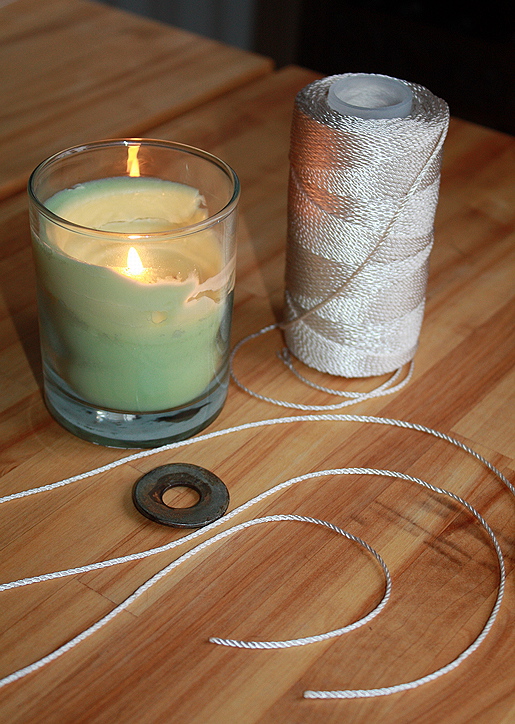
Don't panic.
As Douglas Adams might have said, had he been a hermit, building the hundred-year fudo is a snap for the hoopy frood who knows where his towel is. At base, it's a ring on a string. In theory, any ring, on any string, is a fudo. But the hundred-year design is distinctive enough to look deliberate, simple enough to produce quickly and repeatedly, cheap enough to be universal, and rugged enough to confront time. Hence the name.
The wherewithals:
o A washer to serve as the ring
o Nylon twine (also sold as seine twine or mason line)
o A flame, such as a candle
o Sharp scissors
o Something to hook the washer on while braiding
o Clear fingernail polish (optional)
The procedure:
 1. Cut three lengths of twine, 40 inches long.
2. Seal each cut end by holding it over the flame. Be careful not to overheat them or the ends will mushroom and discolour. They might also catch fire. (Fireless method: dip the cut ends in fingernail polish.)
3. Smooth the three strands together and knot the hank four to six inches from one end. Any style knot will do, from simple to fancy, but mind you don't outsize the ring's (washer's) hole. Half-knot is code, if you seal it with fingernail polish. If not, a figure-eight is less likely to pull out.
4. Optional: seal the knot with a liberal coat of fingernail polish. This stuff partially melts the nylon, resulting in a knot that's permanently welded shut.
5. Suspend the ring from the bridle you've made, so that it hangs on the knot, with one strand on one side and two on the other.
6. Hook the ring on
 something. The photos show an S-hook I made from a coat hanger. It hooks over the edge of a counter or table, to a chair back, on a fence or branch, on my shoelace, sandal strap, or big toe, etc. You can also set a nail in a board or bench, or find some doohickey around the place that already has a hooky bit you can press into service. Just anchor that ring.
7. Tie the single strand around the other two with a half hitch, as shown in the photo above. Tighten it up and straighten out the knot so it will hang straight when you're done. (Keep tension on the strands while passing to the next step, to make sure the knot doesn't pull up or down in the process.)
8. Make a cord of the strands, using a standard 3-strand braid.
 9. Knot the cord about six inches short of the strand ends. (Generally you leave the end tassel a little longer than the ring tassel, because it'll need to be trimmed up a bit.)
10. Trim the end tassel so it's the same length as the ring tassel. This step also lets you smooth out any unlaying of the strand ends that has happened during the braiding process. (Common in twisted line.)
11. Reseal the trimmed ends with fire or fingernail polish.
12. Optional: seal the end knot with fingernail polish.
And you're in business. Hang the fudo in a place where you feel at peace, or where you'd like to feel at peace, or where you think others may feel at peace, or where you'd like others to feel at peace. Alternately, give it to someone else, either in comradeship or as encouragement in hard times.
Then make another one. Lather, rinse, repeat.
Hundred-years can also be made of other colours, with non-washer rings, and other numbers of strands. A precise definition doesn't exist, but in general they're small, have one to four strands, and cheap rings, ideally ones that were found or salvaged. Bigger, fancier, or more expensive fudos, and those made of less durable cordage, are still fudos, but they're not hundred-year fudos.
Because you just can't beat that white, three-strand, hundred-year fudo. The glorious foot soldier of Fudo's stone army.
Hope to see yours out in the world one day.

Wednesday, 11 January 2012

Thursday, 5 January 2012
My Life as a Woman

Once I was a woman. My family was prosperous, and I was passably pretty. Not the grist of poems; of no uncommon grace, and none of my constituent parts particularly well-shapen or remarkable. But I had what I had, and I knew its worth.
Most of what I had was a low cousin of insight. I knew how to appear susceptible, and how to be wanted. I had a genius for promising without pledging, for seeing without sensing, for living without giving. I had a keen eye for foible, and no gift for guilt.
And so I seldom lost. In all things, at all times, I had my right-now and my next-time. I'd spend one, then move to the other. Because I had choice, I was never without. Because I was never without, I felt no remorse. Because I felt no remorse, I never suspected.
I was desirable, playful, and powerful. Others were a means to an end. They were bursary, accessory, distraction. Men in particular I pressed like lemons, because they were lemons: pulpy, perishable, and worst of all, predictable. I had my next-time, and a knack for pretence. Those who loved me feigned ignorance, and so, I argued, gave leave. I played, and even believed, the victim. And I was careful to suppose no more.
I left a trail of them, like bread crumbs: the crumpled poems that were not, in the end, about me. And I was never alone.
What I have just written is not the truth.
(Adapted from 100 Days on the Mountain, copyright RK Henderson.)
Wednesday, 4 January 2012

Monday, 2 January 2012
What's Your Buddhist Name?

My Buddhist name is Bodhisattva Moon Torch. Don't miss out on this chance to be a Major Zen Dude or Diva. Get yours today! And let us know what your new name is.
Subscribe to:
Posts (Atom)